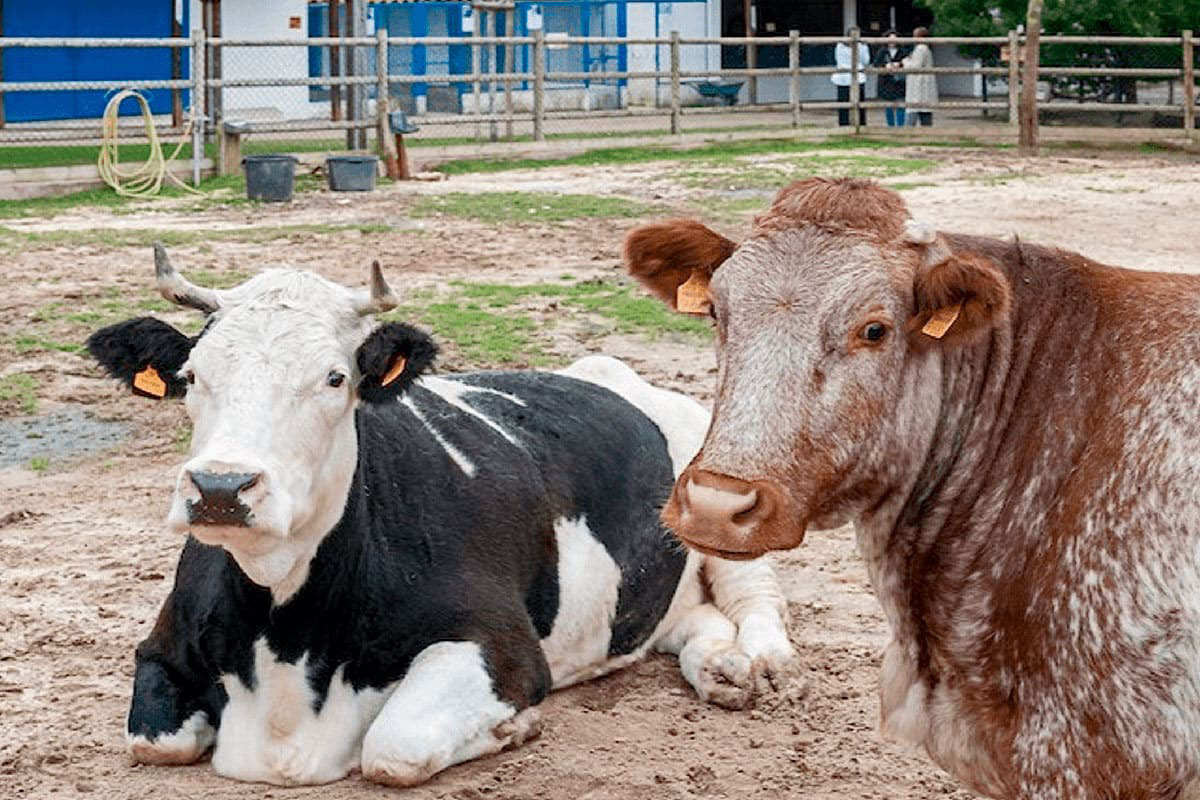
At Quinta Pedagógica dos Olivais, the motto every Saturday, whether in the kitchens, meadows, orchard or anywhere else on the farm, is to close the doors to the city and discover what is done in the countryside, right in the middle of Lisbon.
Here you can see and get to know more than 80 animals and, throughout the year, there are also rural traditions from the north to the south of the country and festivities in the rural calendar.
Participation: free upon registration at qpo.marcacoes@cm-lisboa.pt (from 9:00 a.m. on the Monday before the date of the intended activity)
More information: Quinta Pedagógica dos Olivais
Schedule
Discovering sheep
Animal welfare is of great importance in the daily routines of a farm.
In this activity, with a flock of sheep as company, we will raise awareness of the importance of respecting and protecting these animals. More than just providing them with food, there are many other rural animal management tasks that are essential to their quality of life, such as cleaning pens, making beds, providing medical care, walking them in paddocks and shearing them. We'll get to know the life of the Quinta's sheep, which native breeds we can observe here and learn about the principle of the "5 freedoms" regarding their well-being.
And we can't talk about sheep without talking about wool, which keeps us warm on the coldest days and which, until it becomes a sweater, scarf, blanket or other warm clothing, goes through several complex and time-consuming stages. A process that has also evolved in the search for more sustainable alternatives.
Participation: maximum of 12 participants
Target audience: over 3 years old
Through the Quinta
We set out to discover the stories and secrets of the different spaces, getting to know the animals and plants that live here.
Get ready to uncover hidden corners and fascinating species that often go unnoticed.
Participation: maximum 10 children plus 1 adult/child
Target audience: over 3 years old
With fruit and vegetables
In the Quinta's orchard and vegetable garden, you can see various fruit trees as well as a wide variety of vegetables, the availability of which varies with the seasons.
The fruit and vegetable group occupies the largest area of the food pyramid and there are various ways of consuming them. Raw or cooked, sweet or savory, there are countless options, but the most important thing is to include them in our diet, starting at a young age, as they are essentially rich in vitamins, minerals and fiber, which are necessary for the body to function properly.
This is an activity for sharing ideas, understanding the importance of seasonal food and, essentially, tasting fruit and vegetables in different ways, because "the eyes also eat"!
Participation: maximum of 12 participants
Target audience: over 3 years old
Rural pharmacy
The use of plants as a source of medicines, remedies and other natural remedies is as old as humanity itself.
Written and oral knowledge obtained through the folk wisdom of the elders is passed down from generation to generation, revealing methods and processes for using plants and plant parts to produce products used in traditional medicine. This is a cultural area of enormous importance in preserving the collective memory associated with the rural world.
In this activity, participants visit the Garden of Aromatic and Medicinal Plants, learn about the history of tea, make remedies and discuss the importance of conserving plant biodiversity for the human species.
Participation: maximum of 12 participants
Target audience: over 6 years old
The bread cycle
Who doesn't love the smell of warm bread, fresh out of the wood oven?
But until we can enjoy this food, there is a journey that begins months before. Rural activity is governed by annual cycles, many of which involve obtaining raw materials for food production. This is the case with bread!
In this activity, participants learn how bread is made and get to know all the stages of the cycle that allow it to be baked: sowing, harvesting and milling, which turns the cereal grains into flour, and finally the whole process of preparation until it comes out of our traditional wood-fired oven. At the end, the best part, everyone gets to taste the freshly baked bread!
Times: two sessions, from 11:00 to 13:00 and from 15:00 to 17:00