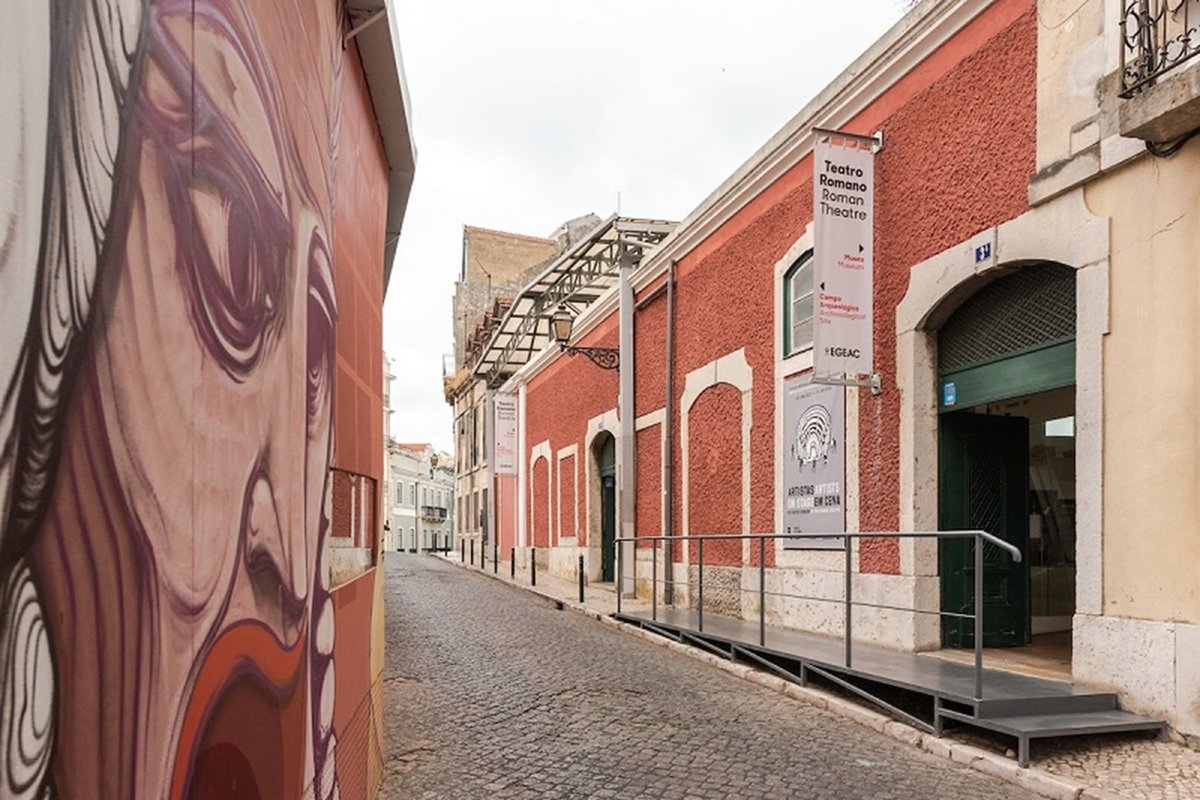
In January, the highlight was the guided tour of the Roman Theater in Portuguese sign language. Among sculptures, ceramics and architectural elements, this visit reveals the impact of this monument on the urban development of the city and invites you to enjoy a privileged view over the River Tagus.
For more details, see the program.
This section reveals one of the most important monuments of the ancient Roman city of Felicitas Iulia Olisipo: its theater, dating from the 1st century AD. In addition to the archaeological site, it includes a long-term exhibition area housed in two buildings from different periods, which simultaneously hosts temporary exhibitions and presents a monthly program.
Schedule
Roman masks
In this creative workshop, families are challenged to explore the masks used in Roman times and create their own versions, painting clay masks full of expression.
But this isn't just any workshop, it's a unique opportunity to be part of the history of the Lisbon Museum!
At the end, each participant will be able to leave their mask, contributing to a large collective exhibition wall, on display during the month of July, alongside the classical theater season. All the masks will later be returned to their creators.
Come and create, imagine and participate as artists in an exhibition made by everyone, where each mask tells a story!
Dates and times:
- april 12, at 10:30 a.m;
- june 20, at 10:30.
Duration: 75 minutes
Target audience: over 6 years old
More information: event page
The people are on the streets
Rebellion and conspiracy! It takes many ingredients to make a revolution.
Throughout its history, Lisbon has been the scene of multiple coups, insurrections, riots, rebellions and revolts that have changed the country's destiny forever. On this tour, through squares and palaces, we revisit the stages of the main revolutions, from 1385 to 1974.
The Museum of Lisbon provides disposable earphones. For reasons of sustainability, we would appreciate it if everyone could use their own.
Dates and times:
- april 25, at 15:00;
- november 28, at 11:00.
Duration: 120 minutes
Distance: 2.1 km
Target audience: over 12 years old
More information: event page
Roman Masterchef - Archaeology Days
The Museum of Lisbon invites the most curious to take part in a workshop inspired by the world of television programs, but with a very special twist: we're in Ancient Rome!
What did the Romans eat? How did they cook without a stove? Were there also snacks and desserts?
In this practical and creative experience, participants become real Roman chefs, exploring surprising ingredients, historical recipes and gastronomic curiosities from two thousand years ago. All this with team spirit, creativity and a touch of spectacle! At the end, each apprentice will take away a "Roman recipe book" to continue to amaze at home.
More information: event page
Glimpses of the Hour of Bacchus - 10 years
In the month in which the Hora de Baco activity is celebrating its 10th anniversary, one of its most frequent visitors - José Alex Gandum - was invited to reminisce about the meetings of so many people that this theater has hosted. Many musicians, many friendships, many conversations, many toasts.
This date is celebrated with images that portray the joy of those late afternoons spent at the Museum of Lisbon - Roman Theatre. These images show the joy and conversations shared at these gatherings on the last Thursday of every month. They show a living museum that welcomes the population, recreating one of the functions for which the theater was built over 2000 years ago: to be a meeting place.
José Alex Gandum is a journalist. From 1988 to 2007 he worked for the weekly Expresso, in the culture and later environment areas. He was the official photographer for the EDP Foundation and worked as a photographer for the Lisbon Tourism Company. During those years, and to this day, he has collaborated with various environmental magazines in the editorial and photography areas.
Photography is his main hobby, and he has held solo exhibitions (at the Instituto Superior de Ciências Sociais e Políticas and at the Velha Gaiteira Bar/Restaurant) and won some awards. She has taken part in numerous group exhibitions, such as at the Setúbal Archaeology Museum, the Oceanographic Museum at Portinho da Arrábida; the Sines Cultural Center; Casa da Baía de Setúbal and Galeria do 11 in Setúbal.
In recent years his photographs have appeared in collective books, especially on the Serra da Arrábida. He has been deputy director of the magazine Memória Alentejana for around 12 years, and is one of the editors and responsible for photography at Revista Arrábida.
More information: event page
Hora de Baco - 10 years old
For the past 10 years, on the last Thursday of every month, the museum has been offering an evening program combining music and wine tasting.
The museum's terrace offers the ideal setting for enjoying the view over the River Tagus, the ancient Latin Tagus.
Adega Cooperativa de Santo Isidro de Pegões has been a partner in this event since the beginning and it is around this nectar of the gods and the most varied rhythms that people gather at the museum, recovering the original function of Roman theaters: the meeting place for the population.
To mark a decade of this activity, which has Maria Miguel Lucas as its programmer, a photographic exhibition will be inaugurated on June 24, at which time a documentary by Rui Pedro Lamy will also be shown, looking back at this event. Completing the program is a special concert on June 25 - Come Five More.
More information: event page
Five more to come!
This special Hora de Baco, which marks the 10th anniversary of this activity, celebrates art as a space of freedom, memory and resistance. Through music and words, it travels through different voices and times, reminding us that theaters and museums are living places of encounter, reflection and hope.
This show is a cross between poetry, popular song and intervention music and affirms the strength of artistic creation in the defense of human dignity, freedoms and rights that make a fairer and freer society possible.
It's been ten years of a project that brings together an ever-increasing number of visitors, friends, friends of friends and five more to come..
Marifá Vocals
Nuno Estevens Guitar
Nuno Faria Bass and Percussion
Maria Miguel Lucas Narration
Maria Miguel Lucas and Nuno Faria Conception
Nuno Faria Production
Participation: free entry subject to capacity
Target audience: over 6 years old
Duration: 120 minutes
More information: event page
Roman masks
The people are on the streets
Roman Masterchef - Archaeology Days
Glimpses of the Hour of Bacchus - 10 years
Hora de Baco - 10 years old
Five more to come!
Related events