


Bordalo Pinheiro as never seen before
Rafael Bordalo Pinheiro was a caricaturist, illustrator, graphic designer, costume designer, ceramicist, decorator and businessman. A total artist. His great friend César Machado defined him aptly: "Artist. In everything and of everything artist."
Born and raised in Lisbon, Bordalo Pinheiro crossed paths with writers, journalists, actors, playwrights and directors. He traveled to European cities, lived in Rio de Janeiro for four years and directed three of the eight humorous newspapers he founded throughout his life. Liberal, socially committed and interventional, he turned humor into a tool for critically reading the country and, even today, continues to provoke laughter and reflection.
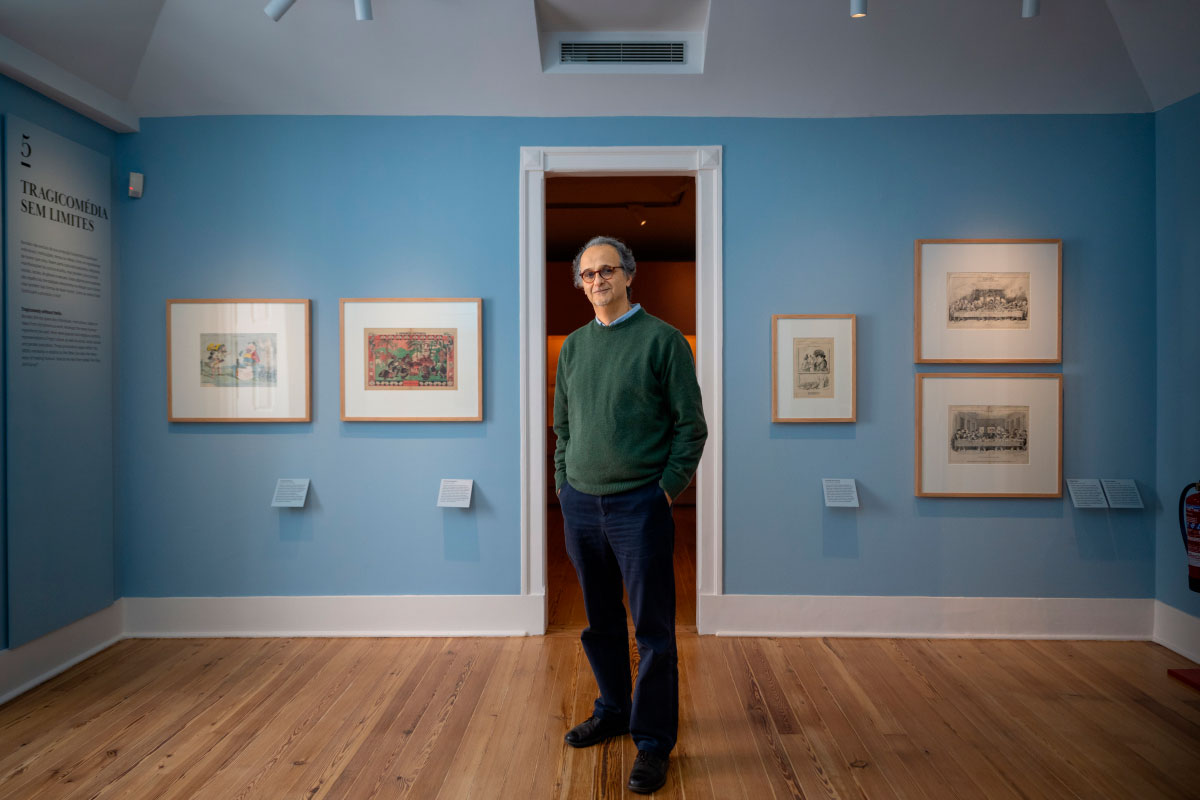
A museum with history and humor in its DNA
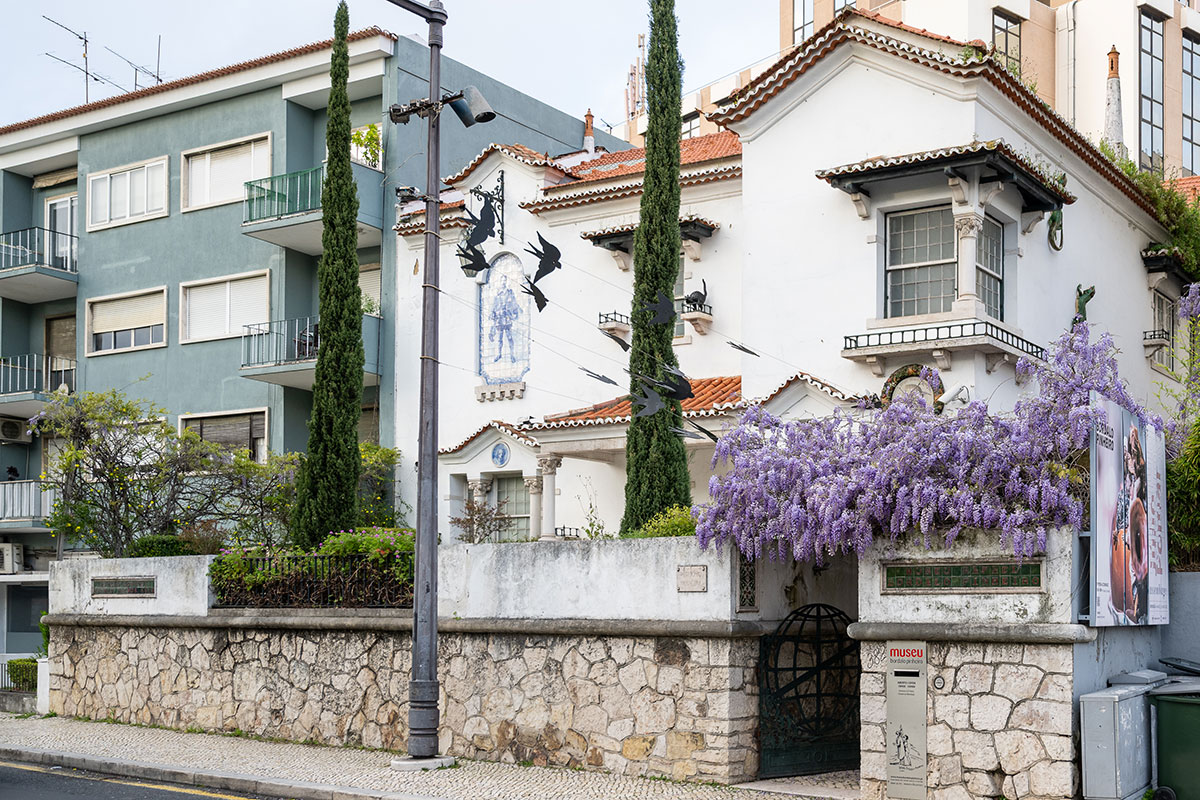
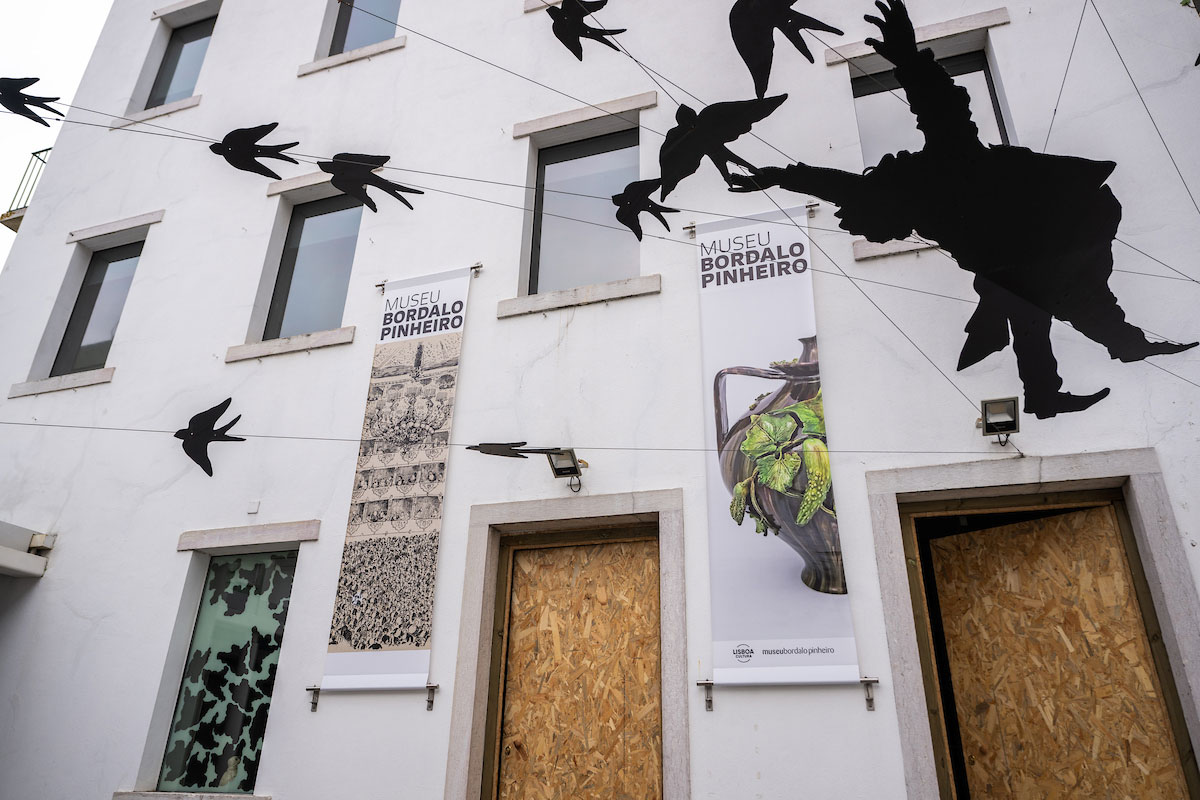
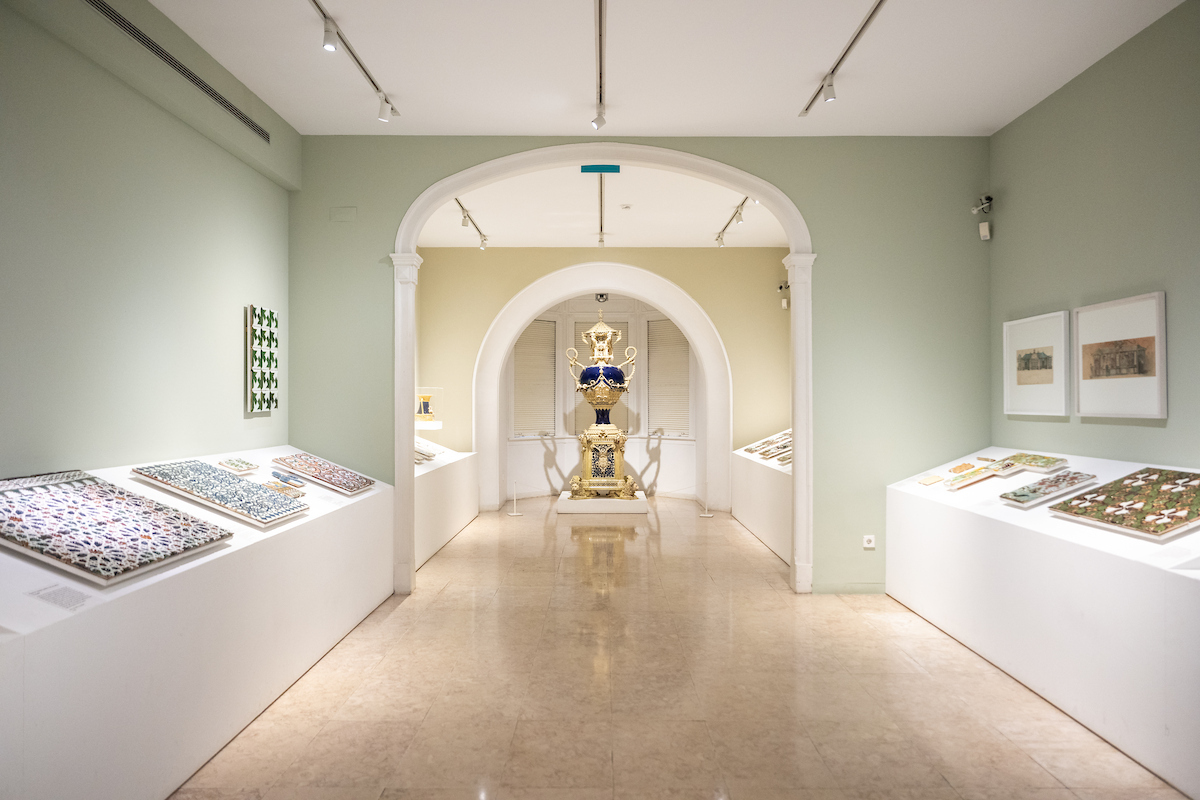
The report takes on another dimension when the building itself enters the narrative. The director of the Bordalo Pinheiro Museum, João Alpuim Botelho, recalls that the museum has several singularities: "It was built from scratch to be a museum", with architectural solutions designed for the visitor's experience.
And he recounts the unusual origins of the institution, which the museum remembers with the humor that always accompanies it:
"We say, a little jokingly, that the museum was born as an antidepressant."
The story goes back to Artur Ernesto de Santa Cruz Magalhães, an admirer of Bordalo Pinheiro, who started the collection during a period of mourning and ended up dedicating the second floor of the house to the museum, forming a collection that includes personal objects, notebooks, originals and working materials by the artist.
Encouraged by friends, he began to collect mainly drawings by Bordalo Pinheiro in a gesture that was also political and ideological. A staunch Republican, close to figures such as Magalhães Lima and António José de Almeida, Cruz Magalhães recognized in Bordalo Pinheiro's work a critical and interventional thinking with which he identified. The collection grew to such an extent that he decided to have a house built between 1914 and 1916: the building that houses the museum today, which received an honorable mention in the Valmor Prize. The ground floor was used for living quarters and the second floor was dedicated entirely to the museum.

Another particularity reinforces the institution's pioneering nature: it was the first museum in the city to have a woman as director. Julieta Ferrão, niece of Cruz Magalhães, took over as director at a time when this was exceptional. Far from a symbolic position, she was a key figure in the development of Lisbon's municipal museums, later becoming the head of the group. With a sense of humor, a trait that seems to run throughout the museum's history, she used to say of herself:
"I'm Bordalo's last caricature".
Today, this heritage is also reflected in the way the museum thinks and positions itself. "We like to call it a charming museum, because it has a very human dimension, " says João Alpuim Botelho. A refuge in Campo Grande, with the memory of a Lisbon that, in the 19th century, was the "Garden Zone", and with the clear ambition of putting the Bordalo Pinheiro Museum back at the center of the city's cultural life.
The Little People
Satire that transcends generations
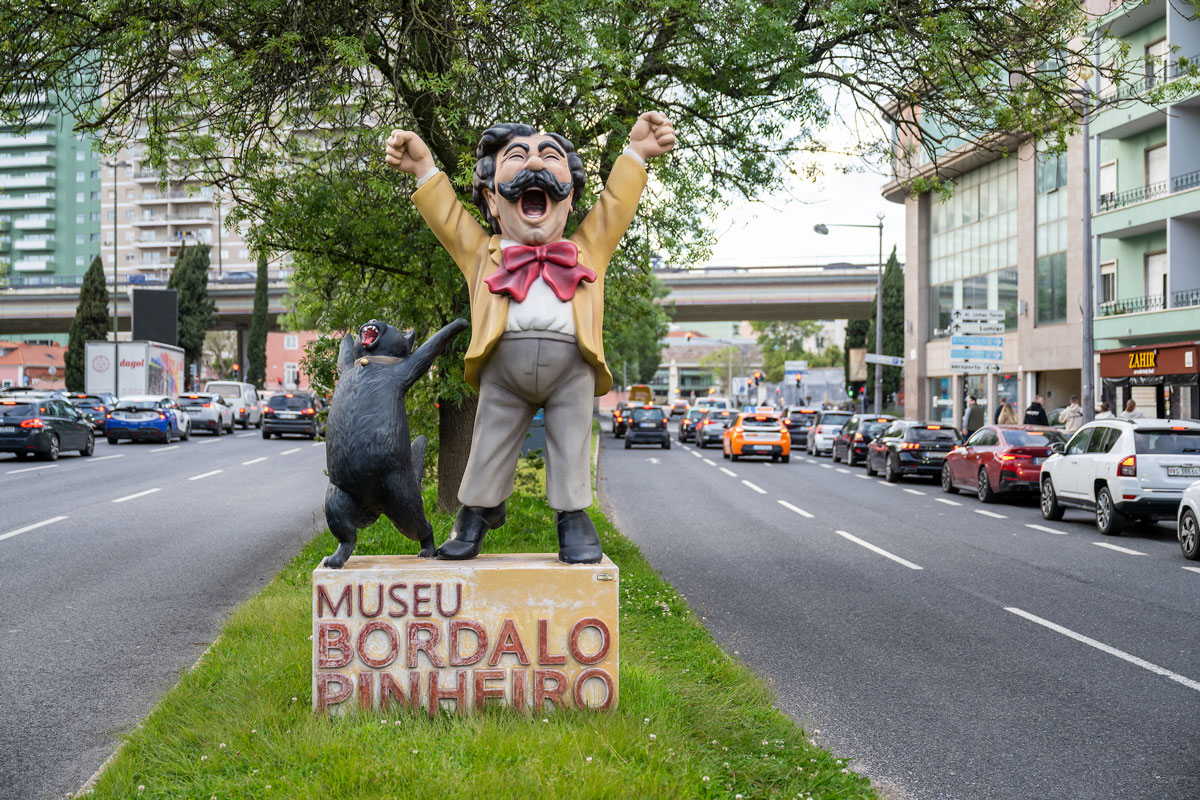
Few figures created in Portuguese culture have achieved the symbolic power, longevity and relevance of Zé Povinho. Created by Rafael Bordalo Pinheiro in 1875, Zé Povinho was born as a graphic character, but quickly became a collective representation: the anonymous people, observant, often resigned, but also capable of irony, criticism and reaction.
In the new long-term exhibition at the Bordalo Pinheiro Museum, Zé Povinho takes center stage. He doesn't appear in isolation, but as part of a group dedicated to the figures and characters of theBordalian comedy , in dialogue with other creations by the artist and with the political, cultural and social personalities of his time. The exhibition allows us to follow the progressive construction of the character, from the first records inspired by the rural customs of the outskirts of Lisbon to the consolidation of Zé Povinho as a political symbol.
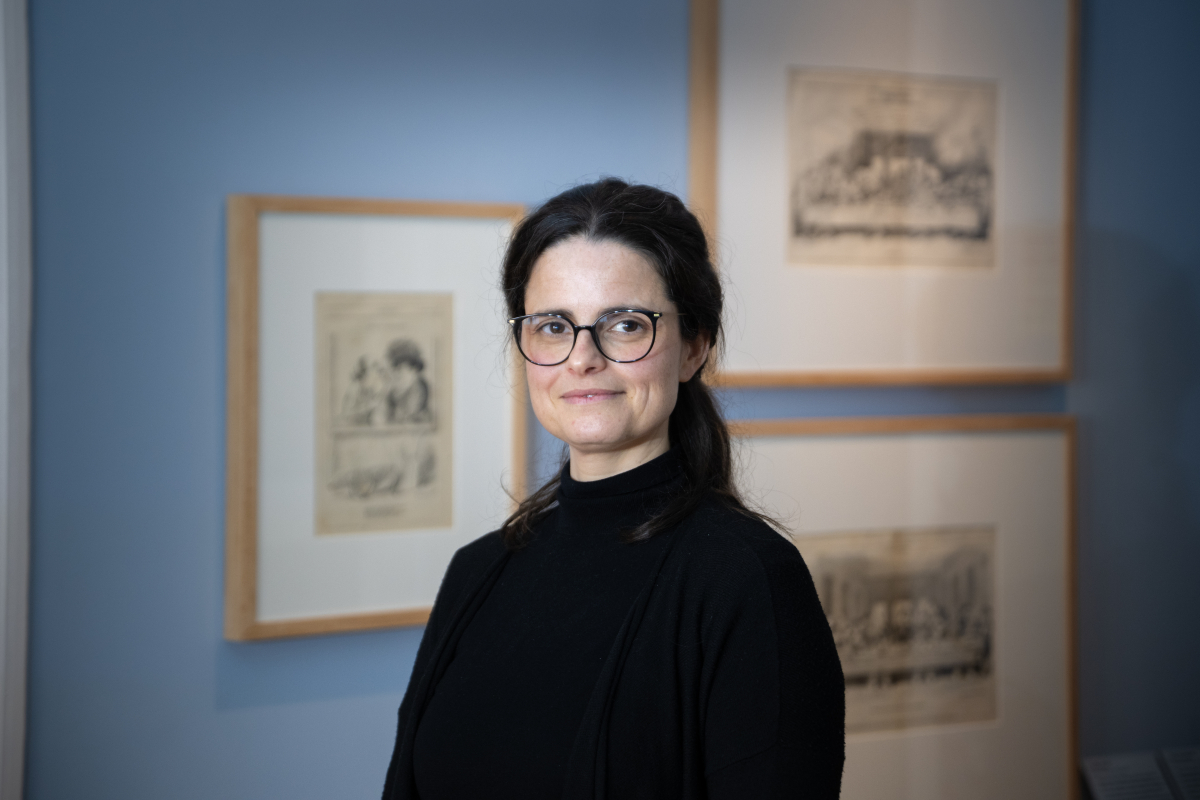
As Mariana Roquette Teixeira, the exhibition's curator, explains, Bordalo Pinheiro created Zé Povinho from direct observation of popular daily life. A simple man, with a strong, recognizable body expression that incorporates gestures, attitudes and silences. Next to him is Maria da Paciência, a female figure also constructed from popular customs, but with an active, intervening and critical personality, often in contrast to Zé Povinho's passivity.
Throughout the exhibition, Zé Povinho appears in multiple contexts: as an observer of the political scene, as a victim of the maneuvers of power, as a metaphor for collective apathy, but also as an agent of reaction. One of the most emblematic moments is the representation of the famous "manguito", a popular gesture that Bordalo transformed into a graphic symbol of protest, associated with the political context of the late 19th century. The exhibition shows how this gesture was not an invention of the artist, but a conscious appropriation of a popular code, amplified by the language of caricature.
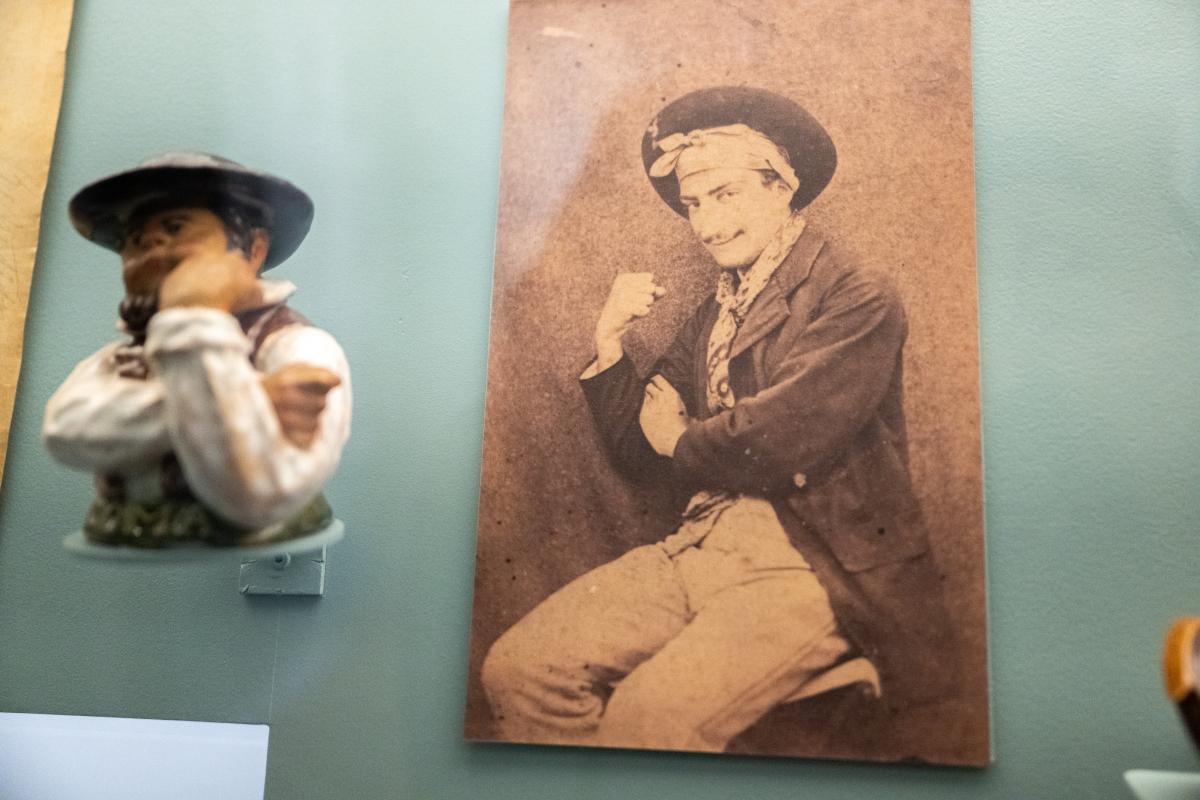
Zé Povinho's strength lies precisely in this ambiguity. He is simultaneously resigned and critical, passive and conscious, comic and tragic. An uncomfortable mirror of society. As João Alpuim Botelho emphasizes:
"This museum tells not only who Rafael Bordalo Pinheiro was, but also the story of the Portuguese people. And Zé Povinho, the resigned, but also the struggle and also the belief that we can do things differently and that people are the most important thing."
In the exhibition, Zé Povinho is not treated as a piece of the past, but as a living figure, in dialog with the present. The visitor is confronted with the topicality of the issues Bordalo raised: the relationship between rulers and ruled, indifference to injustice, the need for civic reaction. Satire, far from being mere entertainment, asserts itself as a political language.
This chapter dedicated to Zé Povinho thus reveals one of the most profound dimensions of Bordalo Pinheiro's work: the ability to create a figure that transcends his time, crosses political regimes and continues to challenge generations. More than a character, Zé Povinho is an open question - about power, about citizenship and about everyone's place in collective history.
Bordalo Pinheiro in six centers
A contemporary interpretation of the work and its era
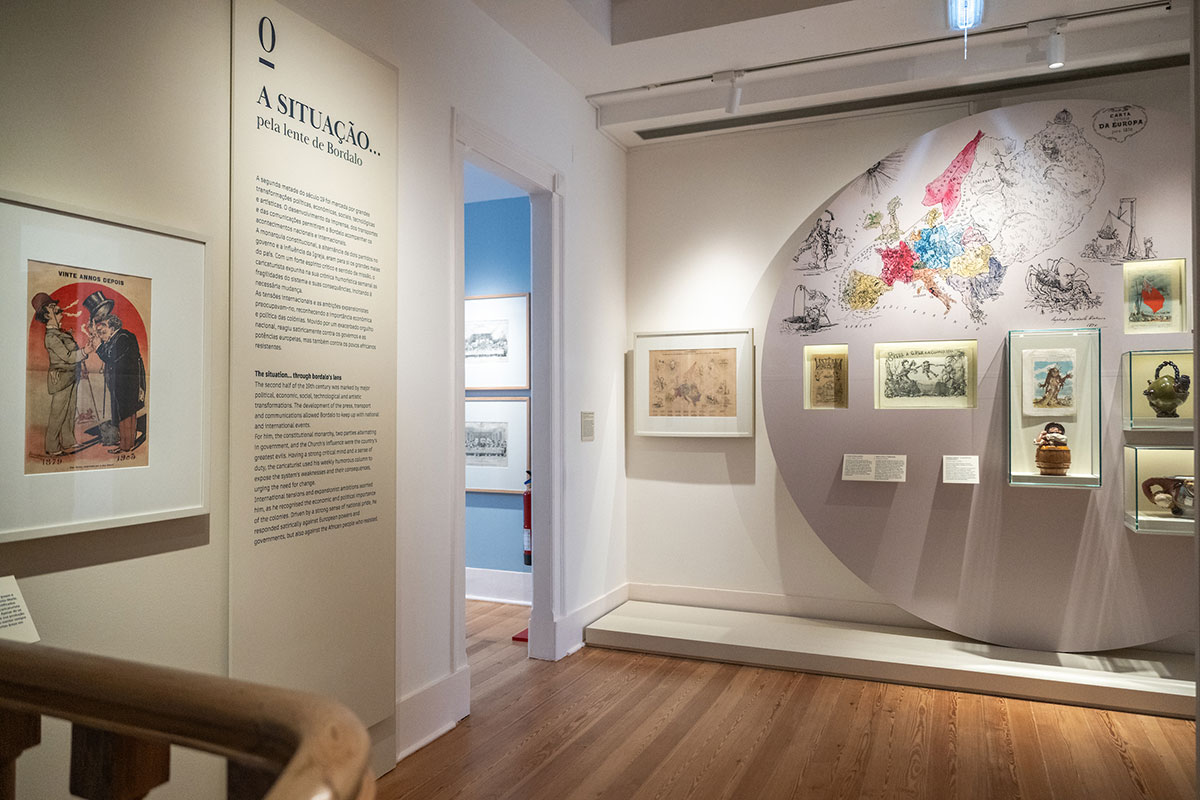
The new long-term exhibition seeks to show Bordalo Pinheiro in all his complexity, in the various areas in which he worked and acted. Curator Mariana Roquette Teixeira has organized the tour into six thematic sections, which allow visitors to delve into the work from different perspectives.
"The exhibition is organized into six thematic nuclei, which analyse the work from different perspectives and allow the visitor an in-depth and diverse reading."
![[Translate to English:] Núcleo 2 - "Figuras e Personagens"](/fileadmin/informacao/reportagens/bordalo/JMB_0043.jpg "[Translate to English:] Núcleo 2")
The first part of the tour is an essential starting point: Bordalo's time. "For visitors to understand Bordalo Pinheiro's caricatures and cartoons, they have to know his time and the mentality of his time," the curator emphasizes. It is here that the artist's gaze intersects with national and international politics, European conflicts, imperialism and the relationship between Portugal and Brazil, in a time frame that the curator himself delimits: "This selection begins in 1870 and ends in 1900. It begins with the first newspaper, Berlinda, and ends with the last newspaper, Paródia."

The "games" of humor and the intelligence of drawing
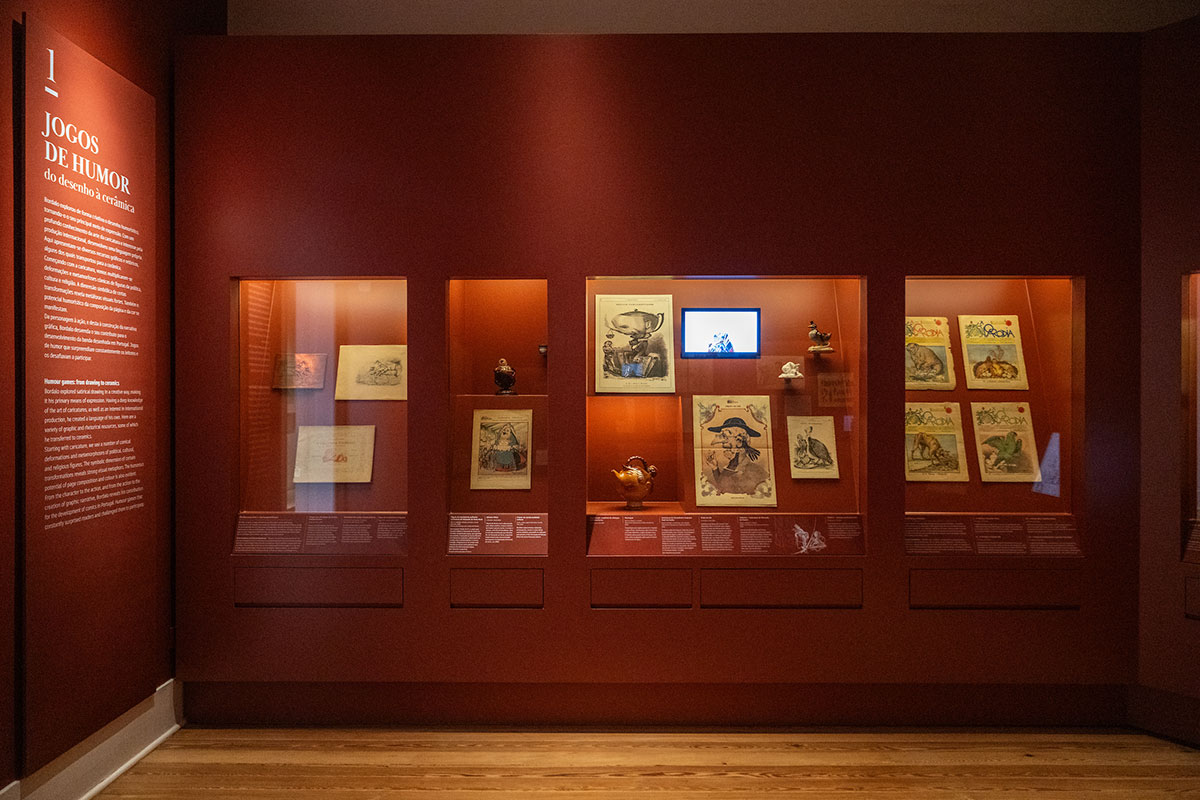
From the context, we move on to the laboratory of creation. In the section dedicated to "Humorous Games", the exhibition presents graphic and rhetorical resources that Bordalo mastered and transformed: visual metaphors, deformations, metamorphoses, color as a symbol, narrative experiences close to comics. Mariana Roquette Teixeira puts it bluntly: "We tried to show visitors the humorous and graphic resources of the drawing, but also the rhetorical ones, through the metaphors that Bordalo Pinheiro used in his work."
The tour also shows the artist's technical and editorial evolution: from the album engraved on copper to the development of lithography, color and formal solutions that break the page itself, drawings that cross margins, that pull the reader into the game, that ask for participation.
Characters, theater and Lisbon as a stage
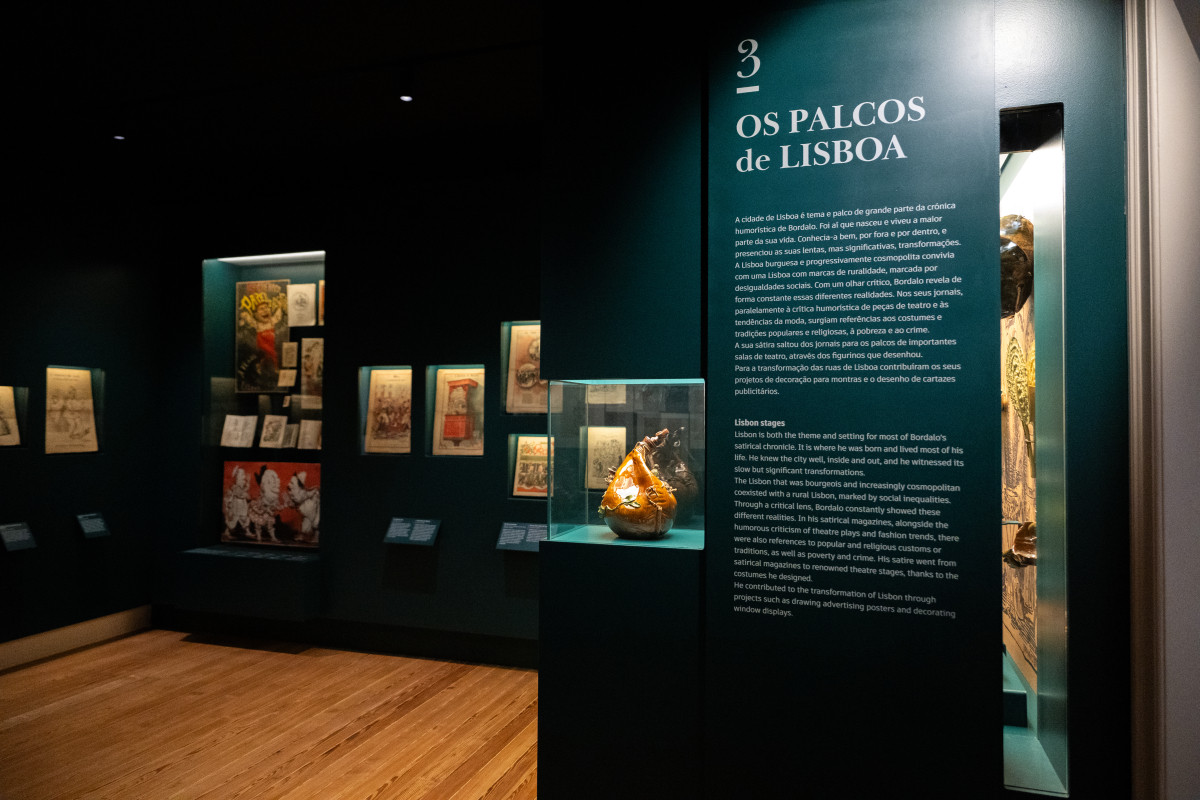
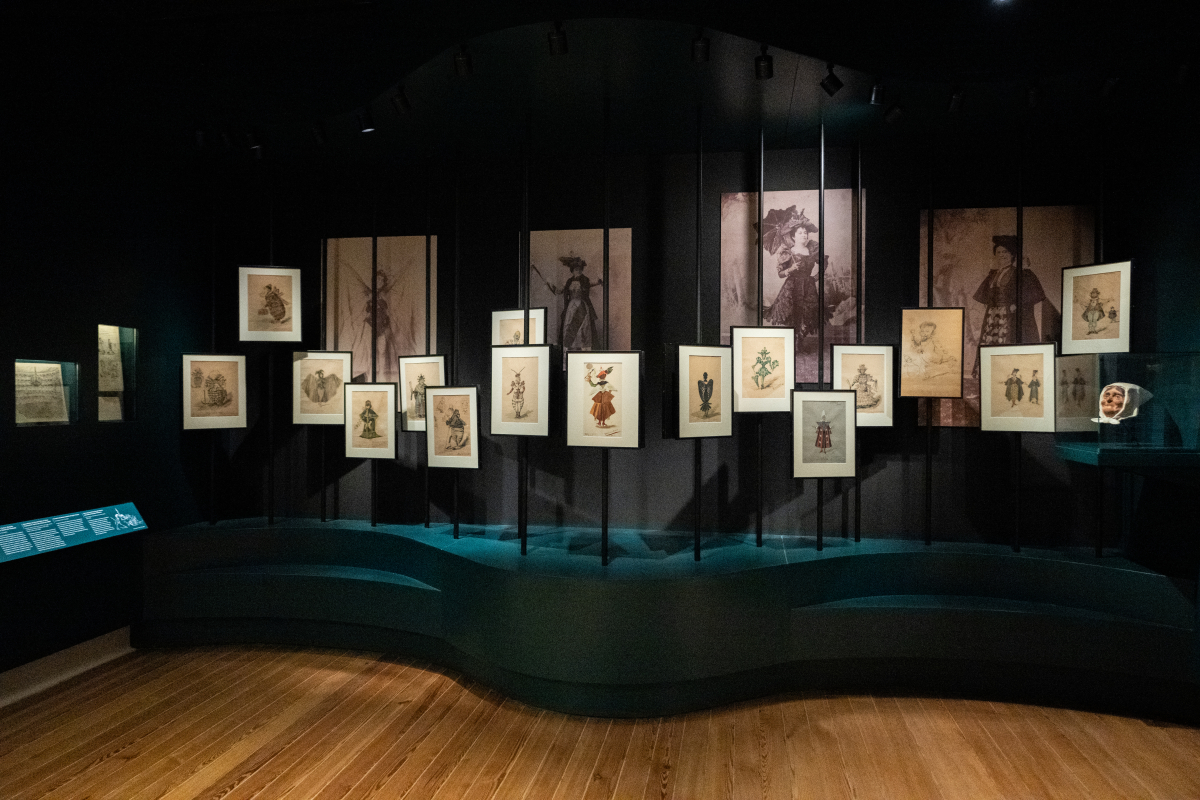
The exhibition moves on to the universe of figures and characters. Actors, actresses, political and cultural personalities, collectibles such as the Album of Glories, and the gallery of symbolic characters come onto the scene. It is also here that two essential figures are consolidated: Zé Povinho and Maria da Paciência, based on references to popular customs.
The next section opens the doors to Lisbon's stages, the theaters and the city as a living setting. Bordalo appears as an attentive chronicler, a theatrical critic and a scathing observer of everyday urban life. The exhibition highlights his relationship with the theater, costume design, advertising and social criticism, on themes which, in dialogue with the city, remain disturbingly topical: rents, evictions, inequalities, public morality.
Political comedy and the pencil as a weapon
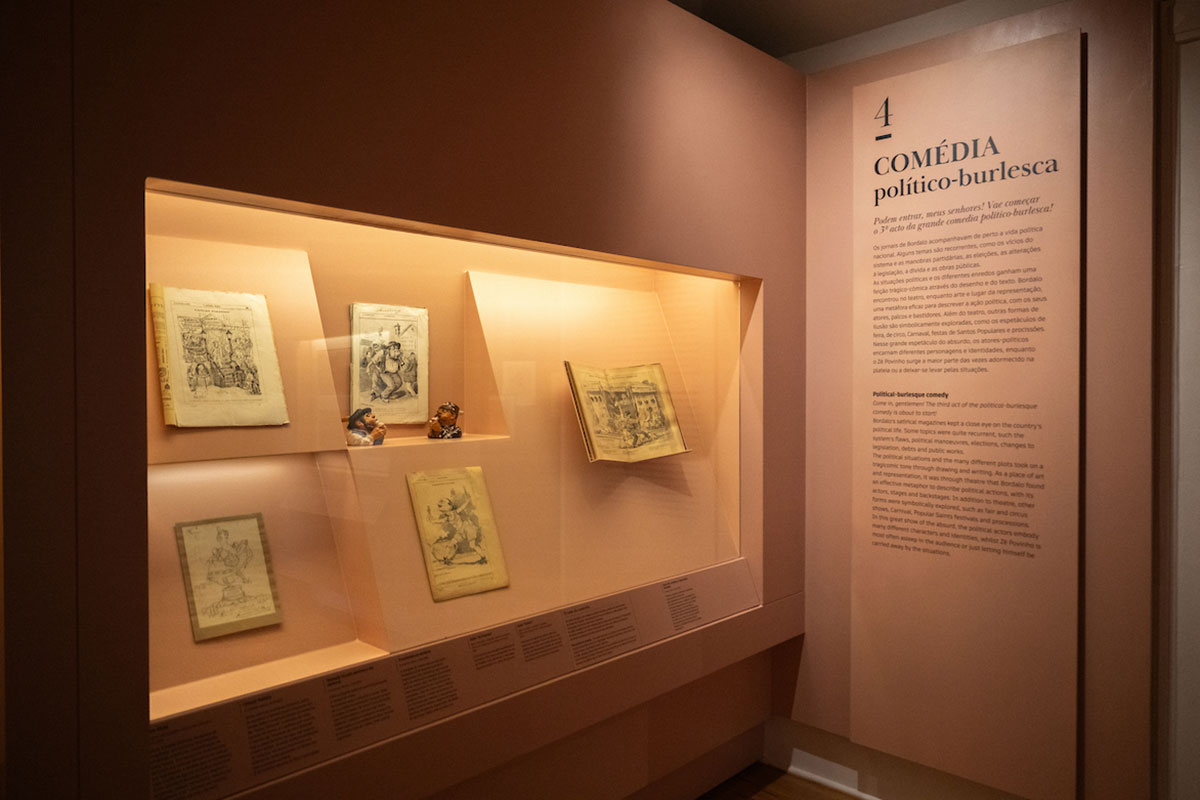
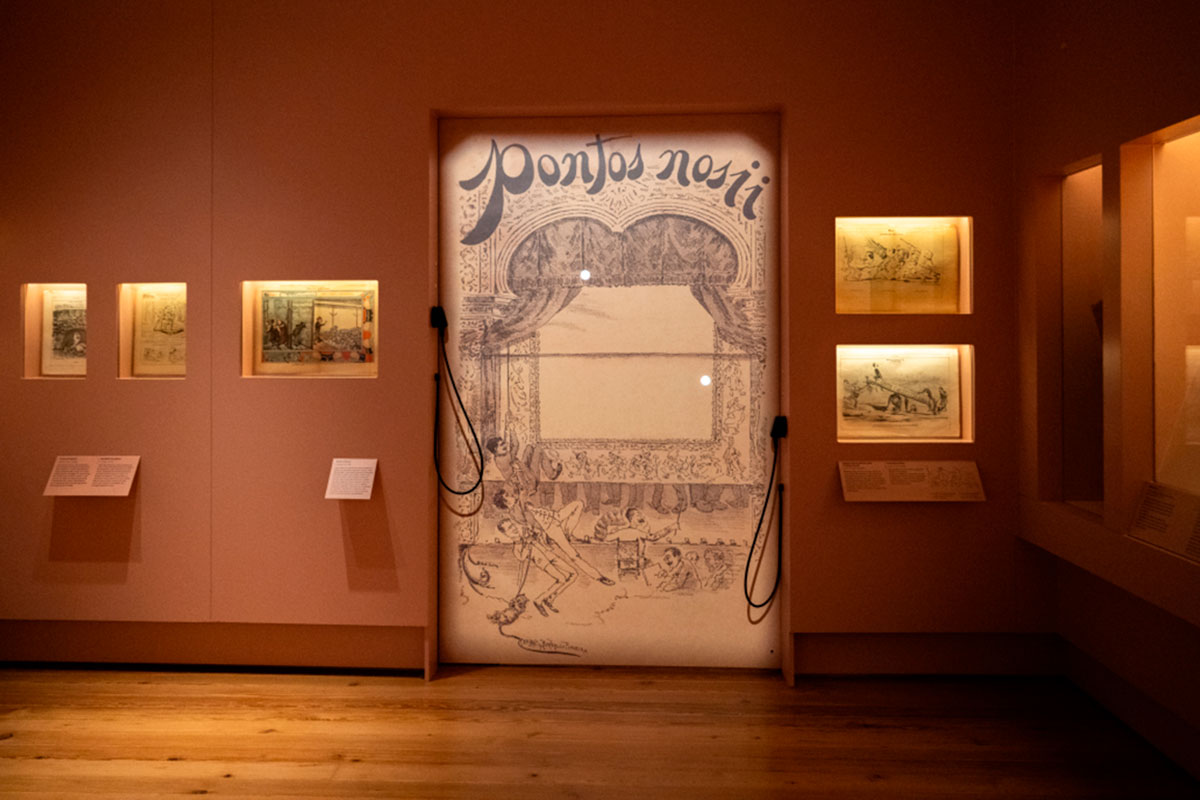
The exhibition doesn't take visitors away from the dilemmas of the present, as it crosses over into political comedy. There is a nucleus that puts the tensions of the work itself on the table: humor that exposes vices in the system, that uses theatrical metaphors to talk about elections and backstage, but that also raises questions about limits, prejudices and contemporary readings.
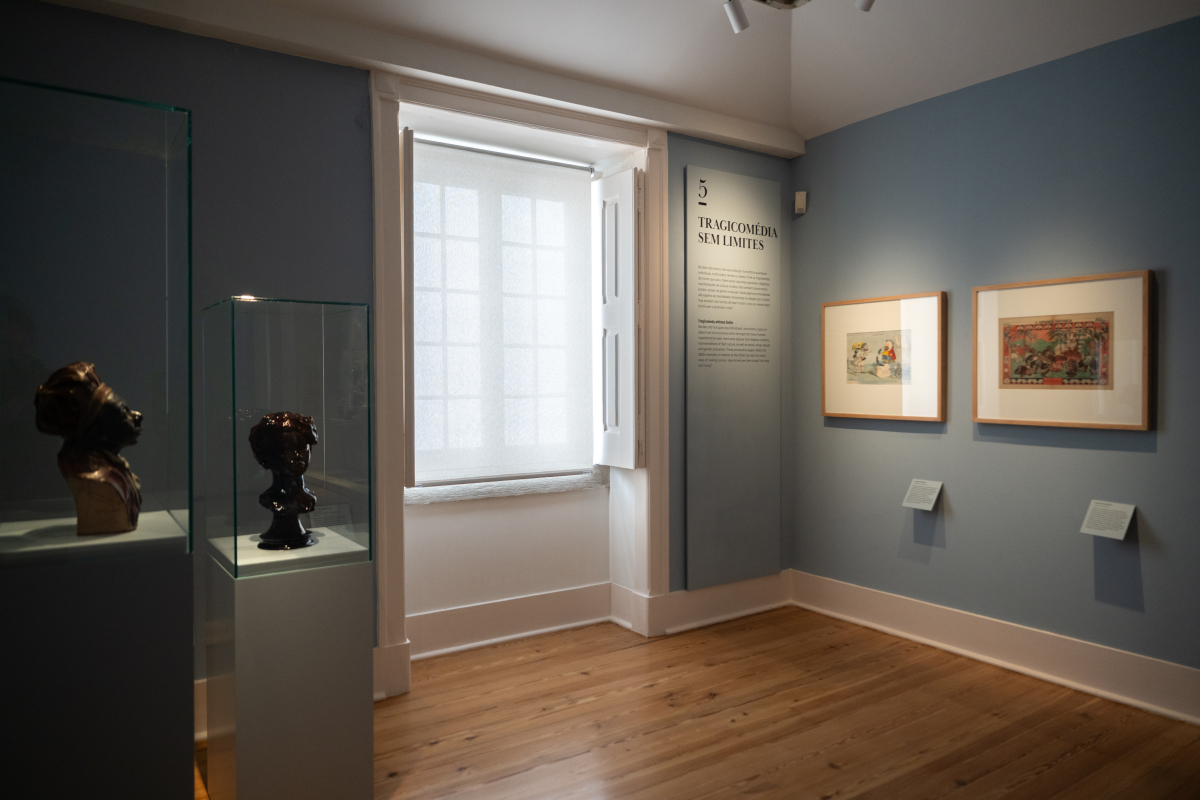
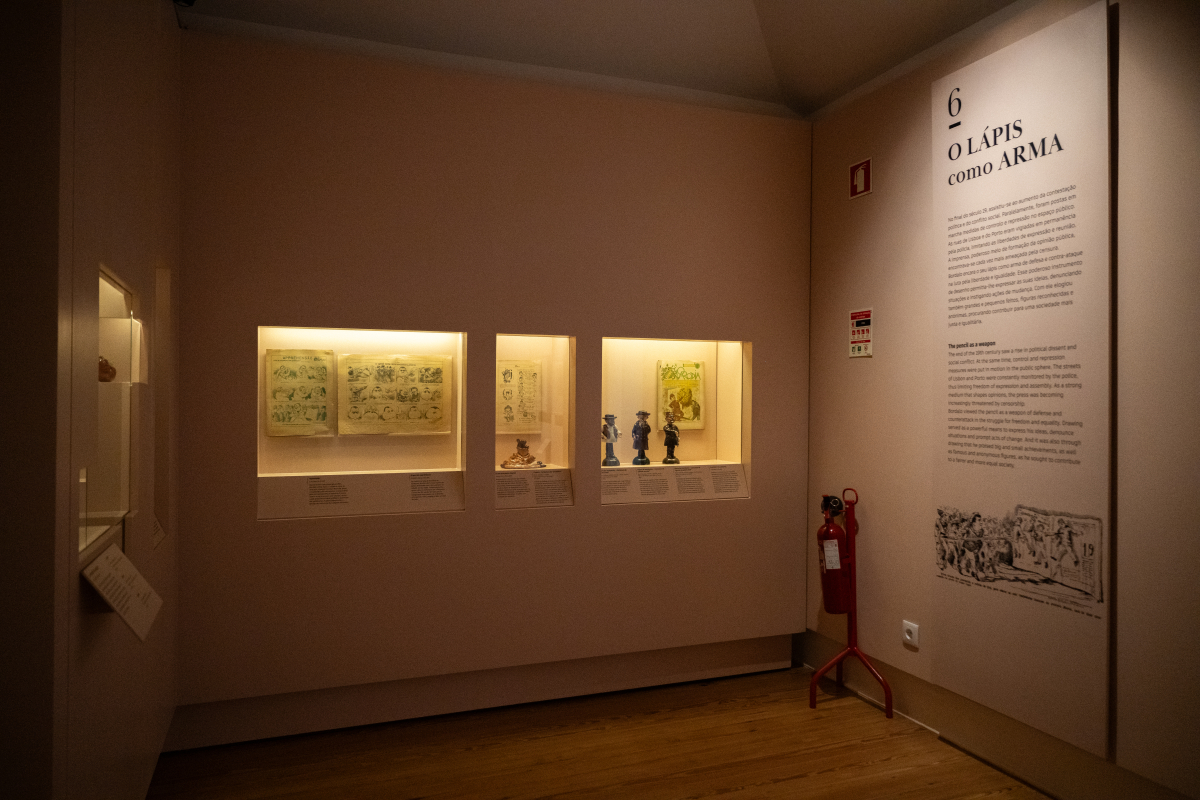
In the end, the exhibition highlights the artist's interventional role. The section "Pencil as a weapon" focuses on freedom of expression and the press, censorship and the need for civic reaction. The curator uses a phrase that sums up this principle: "the newspaper is like the street, it belongs to everyone." The image becomes literal and political: the street as a place of freedom and conflict; the drawing as a gesture of resistance.
A municipal legacy in permanent construction
Ever since the Bordalo Pinheiro Museum was founded, its founder, Cruz Magalhães, had cherished the idea of bequeathing his collection and the museum to the City of Lisbon, a goal that was realized in 1924.
After renovations, the museum reopened in 1926, already in the possession of the Lisbon City Council, refurbished and enlarged on the first floor.
The museum's history continued to be made up of new additions, through acquisitions and donations of works previously in the possession of Bordalo Pinheiro's family and private collectors. When Cruz Magalhães died in 1928, Julieta Ferrão took over the running of the Museum, and the Group of Friends Defenders was given the role of promoting Bordalo's work. In 1942, the Museum was integrated into the Municipality's Museums Service, which had been created at the time, and in 1962 it was managed jointly with the City Museum and the Antonian Museum.

In 1992, the construction of a new building to the rear of the museum sought to make up for the lack of space in the original house and to provide it with a Temporary Exhibition Gallery. In 1999, the museum faced serious structural problems following the construction of a building on adjoining land, which forced it to close for consolidation work. It reopened to the public in 2005, after a thorough refurbishment of the entire complex and surrounding area, with a new museum program based on updating the research carried out. The exhibition supports were designed to allow the collection to rotate, guaranteeing the cyclical renewal of the permanent exhibition and the dissemination of the vast collection to the public.
In 2016, the year it celebrated its 100th anniversary, the Bordalo Pinheiro Museum was transferred from Lisbon City Council to EGEAC. This transition was marked by a significantly expanded range of programming and the opening of the Parody Room, dedicated to short-term exhibitions and other activities.