Stories, characters, places and memories that have marked Lisbon come to life in guided cultural tours designed for those who like to get to know the city beyond the obvious. From Roman Lisbon to literature, from freemasonry to the great episodes of history, each itinerary is an invitation to walk through the past and look at the present with new eyes.
These routes invite you to explore emblematic and lesser-known places, in a journey that crosses heritage, literature, remarkable episodes and surprising stories.
Between March 3 and 27, take part in a discovery experience led by experts, lasting approximately 1h30 to 2h.
Participation:
- Prior registration required via itinerarios.culturais@cm-lisboa.pt or telephone (+351) 218 170 742
- Bookings must be made one month in advance;
- Limited places.
Prices:
- One-way ticket (1 visit) - €4.35;
- Double ticket (2 visits or two people) - 7,24€;
- 10 ItinerariesVoucher - 29,20€
Schedule
Masonic Lisbon
Freemasonry is one of the most talked about, respected, contested and controversial initiation orders throughout history. As a counterpoint to religious influence, it affirms the primacy of man and has played a decisive role in several landmark events in Europe.
This itinerary invites you to rediscover some facts accessible to the uninitiated, as well as the Masonic symbolism that punctuates the city - visible to all but not always recognized.
Dates and times:
march 3 and 19, at 10:00.
The Places of the Inquisition
In 1536, during the reign of King João III, the Inquisition and the Tribunal of the Holy Office were established in Portugal. This court, which functioned until 1821, judged heresies that threatened the Catholic Church.
In Lisbon, the Court's headquarters were located in Rossio, in the former Estaus palace, close to where the D. Maria II National Theatre now stands. Rossio was also the scene of several autos de fé, public ceremonies for the punishment of those condemned by the Inquisition.
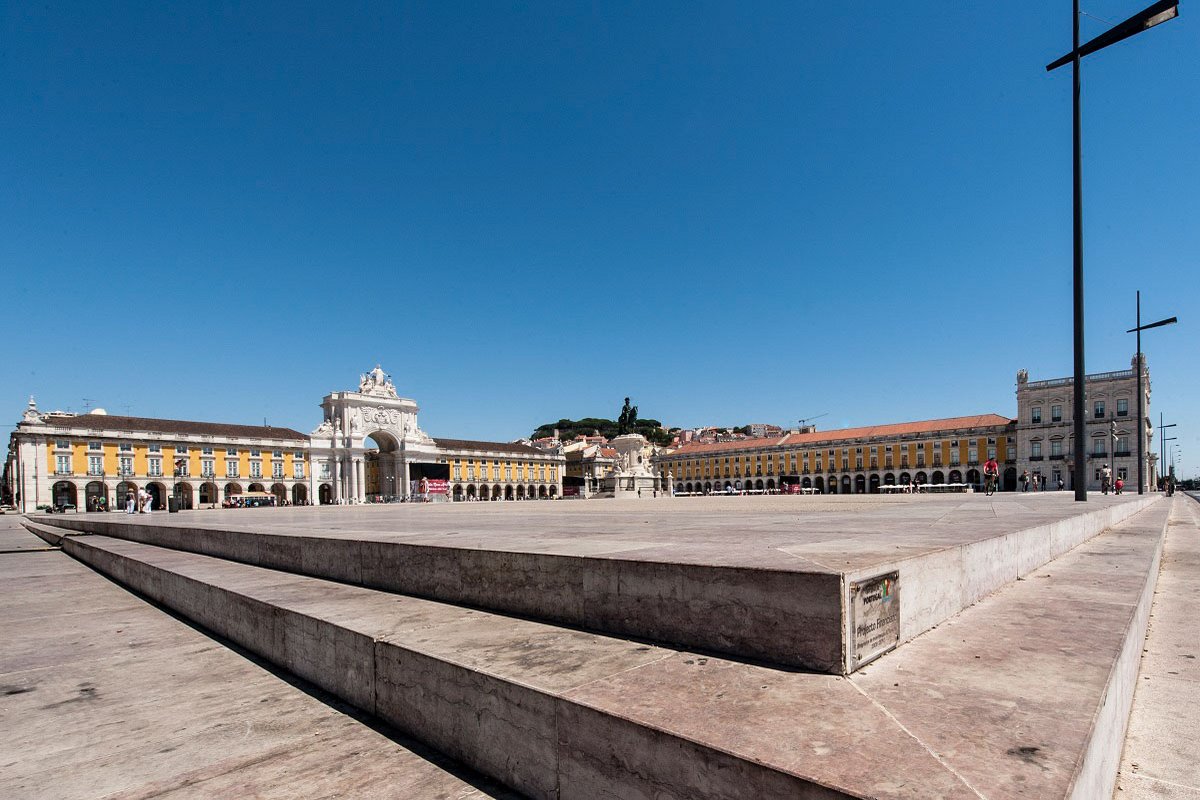
This itinerary will take you through some of the places related to this institution, from Rossio to Praça do Comércio.
Dates and times:
march 3, 6, 10, 20 and 24, at 10:00;
march 14, at 10:30.
Lisbon in the works of Camilo Castelo Branco
Camilo Castelo Branco, the author of a prolific body of work, is one of Portugal's greatest writers. His writing, like that of Eça de Queiroz, is essential for understanding everyday life and society in Portugal in the second half of the 1800s.
He lived an intense and troubled life, which is reflected in many of his novels. The tour takes us through the Lisbon of his time, the setting for books such as The Fall of an Angel, and through the remarkable episodes of his biography.
Dates and times:
march 5 and 24, at 10:00.
Roman Lisbon
Discover the fascinating Roman Lisbon through a cultural itinerary that passes by emblematic sites such as the ruins of the Roman Theater and the religious, thermal and industrial areas.
Along the way, you can learn about the daily life, engineering and rituals of the Romans who lived on the hill next to the Tagus. A walking tour of underground and historic Lisbon, where the past emerges discreetly in the heart of the modern city.
Dates and times:
march 10 and 26, at 10:00.
Love Stories in Lisbon
The love stories of well-known characters from the life of Lisbon, or the country, are unveiled in this journey that shows places of encounters and disagreements. Not always happy, some of these stories shook society or changed the course of history.
The Campolide neighborhood
In the Middle Ages, the landscape of today's Bairro de Campolide was marked by cultivated fields and vineyards. The big change came with the construction of the Águas Livres Aqueduct, a monumental work intended to solve the city's water supply problem and which brought many of the workers to settle here.
Population growth and urban development in the 19th and 20th centuries shaped the identity of this site, which is revealed on this tour.
Dates and times:
march 12, at 10:00 - O Bairro de Campolide I
march 17, at 10:00 - The Campolide II Neighborhood
In the wake of the attack
One of the most remarkable episodes of the 18th century culminated in one of the most famous and brutal court cases in Portuguese history - the Távoras case.
More than a journey through time, this route invites you to explore the political and social tensions that shaped a Lisbon that was being rebuilt after the 1755 earthquake. By following the traces left by this plot of conspiracy, punishment and propaganda, we discover a city deeply marked by intrigue, ambition and profound change.
Architect Carlos Mardel and the Fountains of Lisbon
In 1731, in order to respond to the problem of water shortages in Lisbon, King João V decreed the construction of the Águas Livres Aqueduct, a public and monumental work that involved the construction of fountains, which created new squares and squares in the city.
Some of these fountains were designed by the Hungarian architect Carlos Mardel who, living in Portugal, was one of the protagonists in the reconstruction of the city after the 1755 earthquake.
Masonic Lisbon
The Places of the Inquisition
Lisbon in the works of Camilo Castelo Branco
Roman Lisbon
Love Stories in Lisbon
The Campolide neighborhood
In the wake of the attack
Architect Carlos Mardel and the Fountains of Lisbon
Related events